
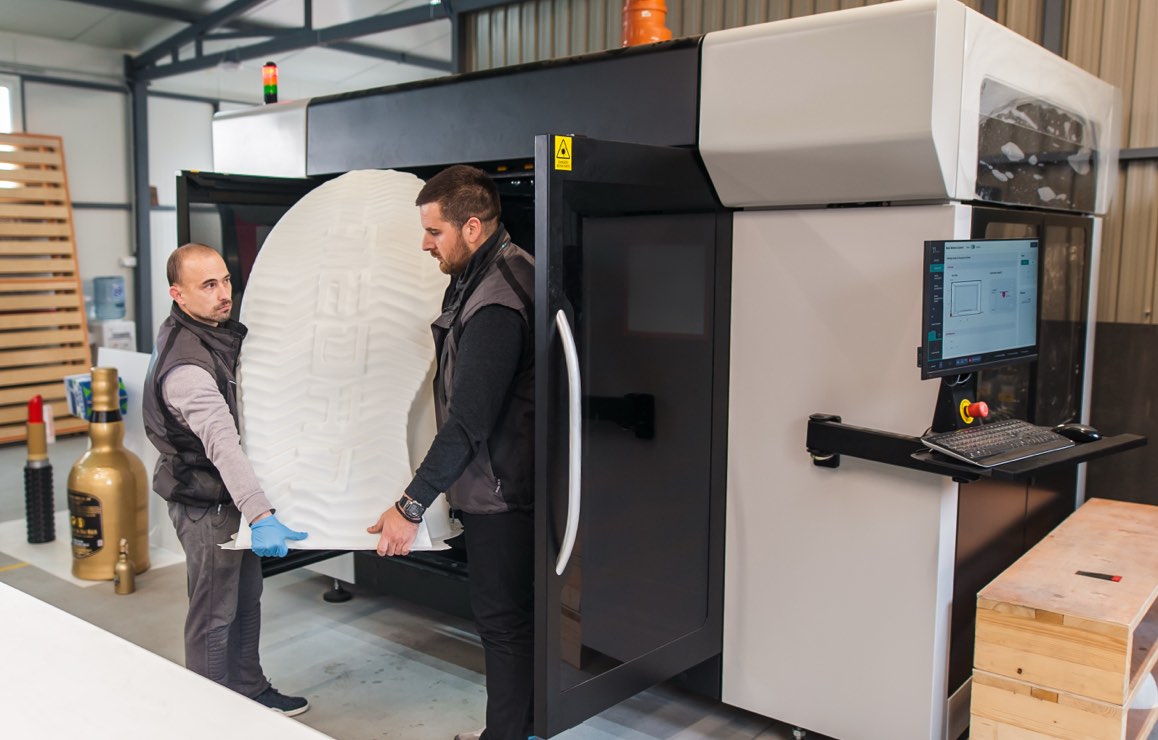
For many companies, 3D printing is the fastest way to turn an idea into a physical part. It allows engineers, designers, and product teams to test concepts quickly without committing to expensive tooling or long production timelines. Whether you are validating a design, creating a proof of concept, or producing a small batch of parts, 3D printing has become an important part of modern product development.
But eventually, many businesses reach the same question: what happens when demand grows?
A process that works well for prototyping or limited quantities may become too slow, too expensive, or too inconsistent for larger production runs. Understanding when to move beyond 3D printing and what manufacturing options are available can help avoid production bottlenecks and rising costs.
Why 3D Printing Works So Well for Prototyping
3D printing offers flexibility that traditional manufacturing methods cannot always match during early development. Design changes can be made quickly, parts can be produced on demand, and there is little upfront investment required.
For prototyping, this speed is valuable. Teams can test fit, function, and appearance before moving into production tooling. It also allows companies to bring products to market faster by shortening development cycles.
Small batch manufacturing is another area where 3D printing may be a good solution. If a company only needs a few parts for testing, demonstrations, pilot programs, or low-volume sales, 3D printing can often be the most practical solution.
Industries ranging from medical equipment and transportation to consumer products and industrial manufacturing use 3D printing to accelerate development and reduce early-stage costs.
The Challenges of Scaling 3D Printed Parts
While 3D printing is excellent for prototypes and very small runs, it becomes more difficult to rely on as production volumes increase.
One of the biggest challenges is production speed. Once demand starts to require production runs of 5 to 10 parts ore more, it may be time to start looking at other processes. 3D printing is great when only a few parts are needed but becomes impractical as demand increases because each part can take significant time to produce, especially when parts require support removal, finishing, sanding, or secondary processing.
Consistency can also become a concern. Variations between print cycles, layer lines, and material limitations may create quality issues that are less acceptable in full-scale production environments.
Per-part cost is another major factor. Unlike traditional manufacturing methods that benefit from economies of scale, many 3D printed parts maintain relatively high unit costs even as quantities increase.
As production grows, companies often begin evaluating alternative manufacturing methods that can improve efficiency, consistency, and long-term cost control.
Moving From Prototype to Production
Transitioning from a prototype to production is not simply about making more parts. It often requires reevaluating the part design, material selection, production process, and long-term manufacturing strategy.
A part designed specifically for 3D printing may need modifications before it can be efficiently manufactured at scale. Wall thickness, draft angles, structural reinforcement, material behavior, and finishing requirements all become more important during production planning.
This is where working with an experienced manufacturing partner becomes valuable. A production-focused manufacturer can help determine whether the original design is suitable for larger-scale manufacturing or whether adjustments can improve performance and reduce cost.
The right production process depends on several factors, including:
- Part size
- Production volume
- Material requirements
- Structural performance
- Surface finish expectations
- Tooling budget
- Timeline requirements
For some products, injection molding may be the right solution. For others, thermoforming may offer a more practical and cost-effective path.
Comparing Production Costs: 3D Printing vs. Injection Molding
Injection molding is often viewed as the standard for extremely high-volume plastic part production or for parts whose geometry requires features only injection molding can provide Injection molding provides fast cycle times, excellent repeatability, and low per-part costs once tooling is complete.
However, injection molding also requires a SIGNIFICANT upfront investment. Tooling costs are substantial, especially for large parts or complex geometries. This can make injection molding difficult to justify for lower-volume production runs or products that are still evolving.
For companies producing moderate quantities, the tooling investment may not immediately make financial sense.
3D printing, on the other hand, avoids tooling costs but typically carries higher per-part costs and slower production speeds.
This creates a gap between prototyping and full-scale injection molding where alternative manufacturing methods can become extremely valuable.
Thermoforming as a Production Alternative
For many larger plastic parts, medium-volume production programs, or parts where specific textures, materials, or laminates are required, thermoforming offers an effective middle ground between 3D printing and injection molding.
In thermoforming, a heated plastic sheet is formed over a mold to create the desired shape. Compared to injection molding, tooling costs are typically much lower and lead times are often shorter.
This makes thermoforming particularly attractive for:
- Medium-volume production runs
- High volume production runs where specific laminates, textures or materials are required
- Products that require different material properties on the front side vs the backside
- Larger plastic components
- Products with evolving designs
- Lower tooling budgets
- Faster production launches
Thermoforming can also produce durable, lightweight parts with attractive surface finishes and strong dimensional consistency.
Many companies that begin with 3D printed prototypes eventually transition to thermoforming because it allows them to scale production without immediately committing to expensive injection molding tooling.
When Thermoforming Makes Sense
Thermoforming is commonly used across industries such as transportation, agriculture, material handling, medical equipment, industrial products, and specialty vehicles.
It can be a strong fit when:
- Parts are relatively large
- Production volumes are too high for economical 3D printing
- Injection molding tooling costs are difficult to justify
- Faster production timelines are needed
- Product designs may continue evolving
Because tooling costs are lower, thermoforming also provides more flexibility for design updates and future revisions.
For many businesses, this creates a smoother transition from prototype to production while keeping development costs manageable.
Choosing the Right Manufacturing Path
Every product is different, and there is no single manufacturing solution that fits every application. The best approach depends on balancing production volume, budget, performance requirements, and long-term business goals.
3D printing remains an excellent tool for rapid prototyping and small batch production. But when demand increases, moving to a scalable manufacturing process becomes essential for controlling costs and maintaining consistency.
For companies looking to bridge the gap between prototyping and large-scale production, thermoforming can offer a practical and cost-effective alternative worth exploring.
About the Author:

1151 N Harford St
Eaton, IN 47338
765-396-4443
765-396-9649 fax